
Views: 0 Author: Site Editor Publish Time: 2026-02-11 Origin: Site


In modern Battery Energy Storage Systems (BESS), thermal management is directly tied to project outcomes: commissioning success, uptime, warranty exposure, and lifecycle cost. For integrators, EPCs, and OEM buyers, the question isn’t “Can it cool?”—it’s:
Will it keep battery temperature stable under real cycling profiles?
Can it prevent PCS thermal spikes from triggering alarms or derating?
Will it help you hit grid-connection timelines and acceptance tests?
The Cooltec 60kW + 60kW Dual-System Liquid Cooling Unit is designed to answer those procurement-critical questions with a practical architecture: two independent cooling loops in one compact unit—one dedicated to battery packs, one dedicated to PCS/power electronics.
Unlike single-loop designs that force battery and PCS to share the same circuit, Cooltec dual-system cooling provides:
Loop A (60kW): Battery Pack Cooling
Loop B (60kW): PCS / Inverter Cooling
This isolation prevents thermal interference and delivers more stable control—especially during transient loads where PCS heat can spike rapidly.
Result: better temperature stability, fewer nuisance alarms, and improved reliability in real containerized deployments.
Battery performance and aging are highly sensitive to temperature. Separate control loops support tighter stability and reduce the risk of uneven thermal conditions across strings/racks.
PCS/inverter thermal behavior is dynamic. Dual-loop architecture contains PCS heat within its loop, avoiding thermal coupling that can destabilize battery cooling.
Thermal instability is a common reason for commissioning delays: alarms, derating, repeated tuning, and failed acceptance tests. A robust dual-system design reduces that risk.
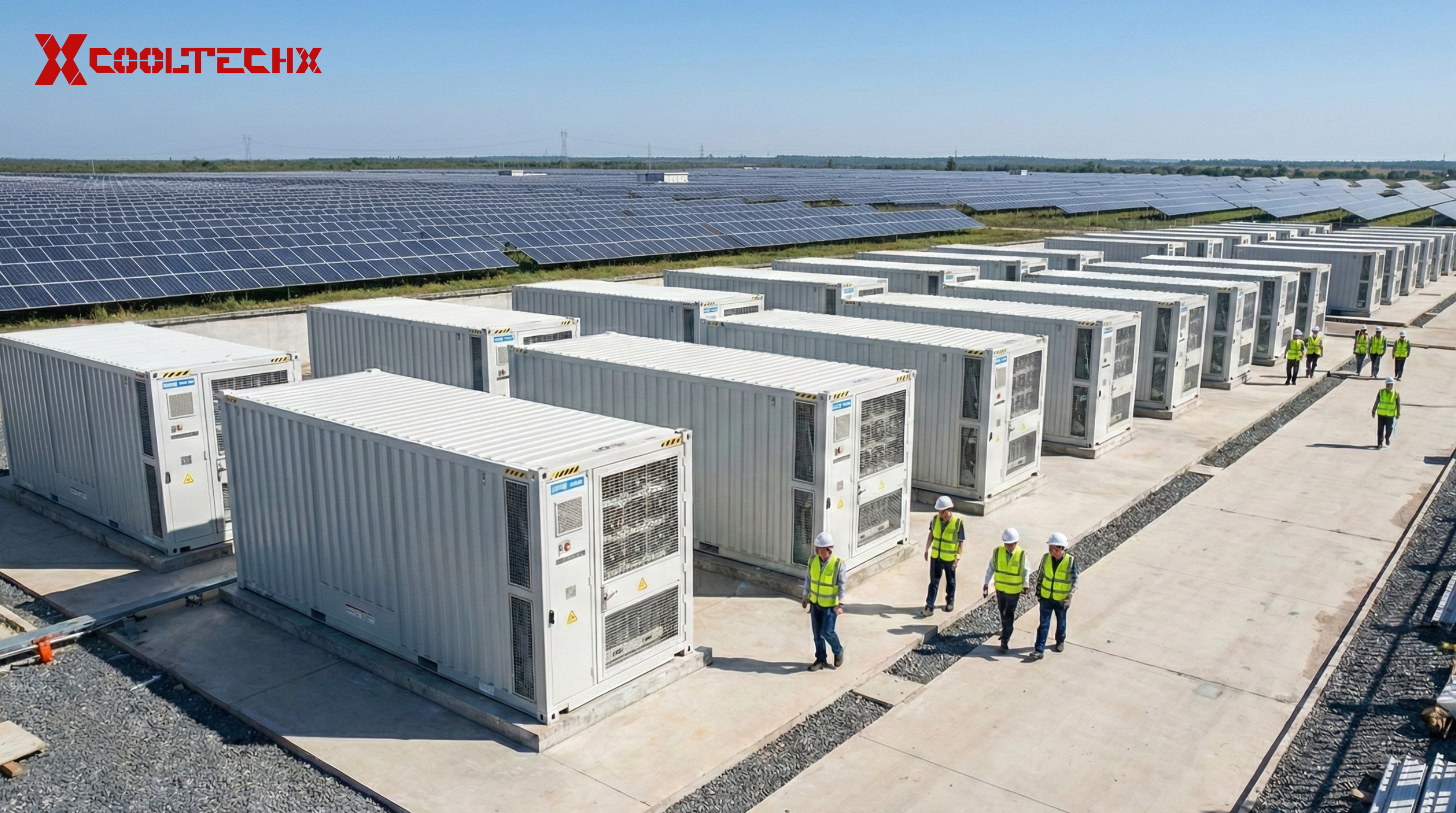
Two independent systems are packaged into a single unit for container/skid integration—simplifying layout, installation, and service access.
Liquid cooling provides high heat transfer capacity for high-density BESS applications, supporting stable operation under demanding ambient and load conditions.
Efficient thermal control can reduce auxiliary power consumption and reduce thermal-related downtime—directly improving lifecycle economics.
For export buyers, “availability + documentation + support” is as important as performance. The solution is structured for project workflows: selection support, clear deliverables, and service-friendly maintenance design.
The dual-system unit has been delivered to an energy storage integrator supporting a 5MWh containerized BESS project, selected specifically for independent control of battery packs and PCS thermal loads.
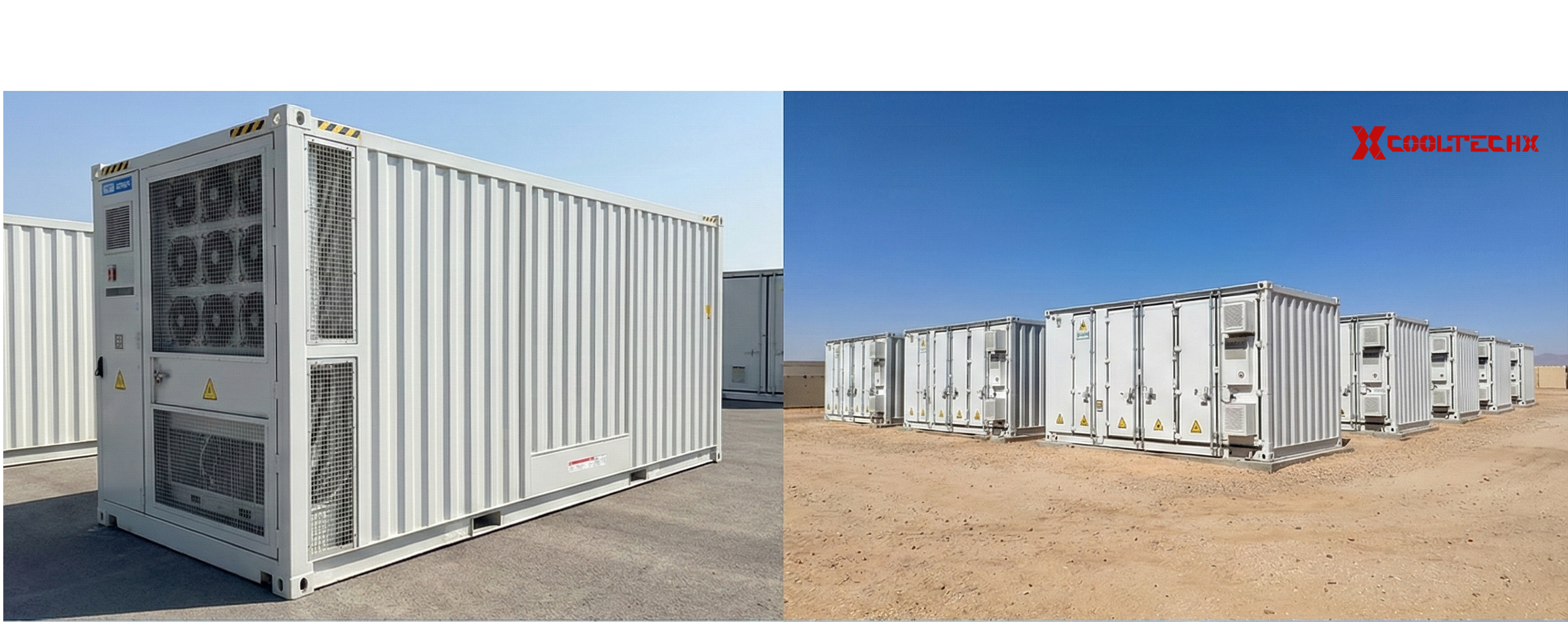
Containerized BESS (C&I and utility-scale)
High ambient environments (hot climates)
Projects with strict commissioning / grid-connection schedules
Integrators needing independent thermal control for pack + PCS

Keep this consistent with your official datasheet / product page.
Cooling capacity: 60kW (Battery Loop) + 60kW (PCS Loop)
Cooling medium: [water-glycol / specify % if standardized]
Control: Independent setpoints & sensors per loop
Operating ambient: [e.g., -20°C to 50°C]
Enclosure protection: [IP rating / anti-corrosion option]
Power supply: [voltage/frequency]
Integration: Container / skid ready, service-friendly layout
When requesting a quotation or technical proposal, we can provide:
Datasheet / technical specification
Dimensional drawing & integration layout
Connection diagram (hydraulic + electrical interface)
Packing list, commercial invoice support, export packaging options
Commissioning checklist & maintenance guidance
Warranty terms & spare parts recommendation list
If you require compliance documentation for your market, specify it in the RFQ (example: CE-related documents, test reports, etc.). We will respond based on the exact configuration and destination requirements.
Dual-system cooling uses independent loops for battery packs and PCS, preventing thermal coupling and enabling more stable temperature control during dynamic load changes.
No. It benefits both C&I and utility-scale projects when you need stable battery temperature and reliable PCS thermal control.
Thermal instability can cause alarms, derating, and repeated commissioning retries. Robust cooling design reduces disruption during acceptance tests and site commissioning.
If you are integrating a containerized BESS and need a reliable thermal management solution, contact us for selection support + quotation.


